
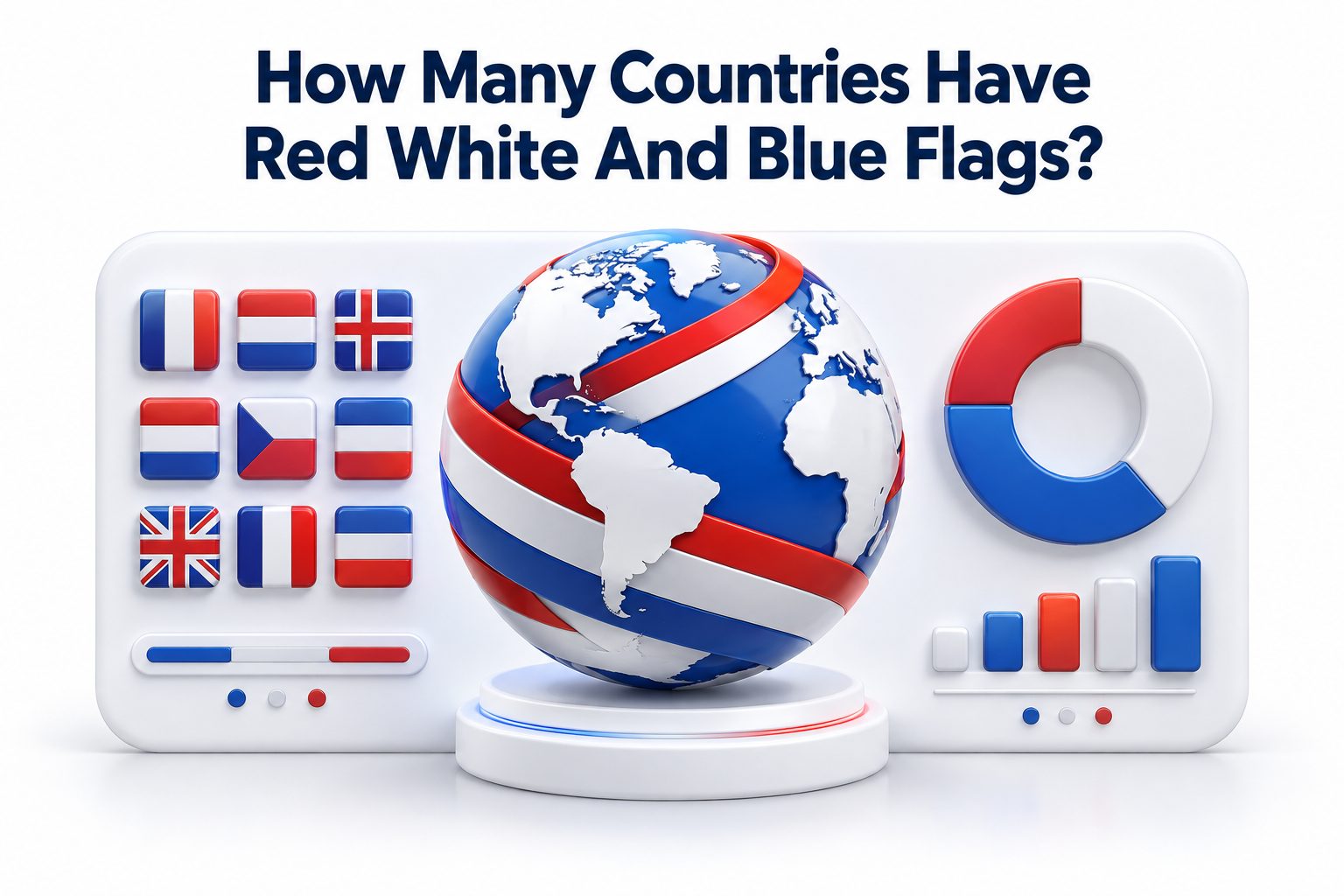
Red, white, and blue are the most familiar colors in world flags, seen from Olympic podiums to international summits. Many people notice the pattern but rarely stop to ask how many countries have red white and blue flags and why this trio appears so often. The answer reveals history, politics, and shared ideals across continents.
These three colors did not become popular by chance. They spread through revolutions, colonial history, trade alliances, and shared symbols of freedom and unity. From Europe to Asia and the Americas, nations adopted them to signal strength, peace, and national pride.
In this article, we break down the exact count, look at regional examples, and explain the meaning behind the designs. You will see which countries use these colors, how their flags differ, and what links them together in modern vexillology and global culture today. Whether you love travel, trivia, or history, this breakdown will give you clear answers.
Why Red White and Blue Appear on So Many Flags
Red, white, and blue carry strong and simple messages that many nations want to project. Red often stands for courage and sacrifice, white represents peace and honesty, while blue signals loyalty, justice, and stability. Together they create a balanced and powerful national identity.
These meanings spread widely after the American and French revolutions. Both nations used the tricolor to show liberty and equality, inspiring others across Europe and Latin America. Later independence movements copied the palette to connect with those democratic ideals and historical success.
How Many Countries Have Red White and Blue Flags Today
So how many countries have red white and blue flags in the modern world. Current vexillology counts show around 30 sovereign nations use all three colors in their national flags. The exact number varies slightly because some definitions include different shades and small emblem details.
The United States, United Kingdom, France, Russia, and Thailand are well known examples. Others include Australia, Chile, Cuba, Panama, and South Korea. Each flag uses the colors in distinct layouts, stripes, crosses, or stars that reflect local history and values.
Quick Facts About Red White and Blue Flags
- Around 30 sovereign nations use red, white, and blue together
- Europe has the largest share of these tricolor designs
- The Dutch tricolor is among the oldest still in use
- Stripes and stars are the most common layout elements
- Shades range from navy blue to sky blue and crimson to bright red
- Emblems and coats of arms help separate similar looking flags
European Flags That Use Red White and Blue
Europe has the highest concentration of red, white, and blue national flags. France, the Netherlands, Russia, Slovakia, Slovenia, and the United Kingdom all feature the trio. Many of these designs date back centuries and influenced flags far beyond the continent.
The Dutch tricolor is one of the oldest, dating to the 16th century. France adopted its vertical tricolor during the 1789 revolution. Russia, Croatia, and Serbia later adapted similar horizontal stripes, linking Slavic unity with shared color symbolism and political movements.
Slavic Colors and Their Historical Roots
Many Eastern European flags share white, blue, and red because of Pan-Slavic symbolism. Inspired by Russia in the 19th century, nations like Serbia, Croatia, and Slovenia adopted the same stripes. The colors were meant to show ethnic solidarity and a push for independence.
Today those flags look similar but carry unique coats of arms and layouts. Slovakia adds its shield, Slovenia adds its mountain emblem, while Serbia uses a crowned crest. These small details help citizens tell allied but distinct national stories apart easily.
Red White and Blue Flags in North and South America
The Americas also show strong use of red, white, and blue. The United States, Panama, Chile, Cuba, and Venezuela all include the three colors. Most drew inspiration from independence struggles against colonial powers and the desire for liberty and representation.
The Stars and Stripes uses thirteen stripes and fifty stars to mark states and colonies. Chile pairs a lone star with red and white bands. Cuba and Panama use stars and stripes in different arrangements, showing shared ideals with separate national paths and pride.
Checklist for Identifying Similar Flags Correctly
- Check stripe direction, vertical or horizontal layout first
- Look for stars, crosses, or central emblems
- Note the order of colors from top to bottom
- Compare the shade of blue and red carefully
- Check flag proportions, long versus square shape
- Look for a coat of arms or national crest
- Confirm country region before making a final guess
Asian and Pacific Nations With These Three Colors
Asia and the Pacific add more diversity to the list. Thailand, South Korea, Cambodia, Laos, and Australia all use red, white, and blue. Their designs often blend Western influence with local traditions, religions, and monarchies rather than copying European revolutionary models directly.
Thailand five stripes stand for nation, religion, and king, covered further in our guide to national flag colors and meanings. South Korea Taegeukgi centers on harmony with red and blue swirls. Australia and New Zealand place the Union Jack in the corner, reflecting historic ties to Britain while adding southern stars.
African and Middle Eastern Examples of the Trio
Fewer African and Middle Eastern flags use all three colors together. Liberia is the clearest example, modeled directly on the American flag to mark freed slaves settlement. Others like South Africa include red, white, and blue alongside green, black, and gold.
Liberia flag keeps eleven stripes and a single star on blue. South Africa Y-shape design merges past and present after apartheid. These cases show how the same palette can carry very different local meanings tied to freedom, unity, and reconciliation efforts.
Tips for Remembering Flag Meanings Easily
- Link red to courage, white to peace, blue to loyalty
- Associate stripes with unity among states or groups
- Remember stars often mark provinces or ideals
- Connect crosses with heritage or historic faith
- Focus on one unique emblem per similar flag
- Use sports events to practice visual recall often
Common Design Patterns in Red White and Blue Flags
Most red, white, and blue flags fall into a few clear design groups. Tricolors with horizontal or vertical stripes are the most common. Others use crosses, canton stars, or central emblems. These simple layouts stay visible at distance and are easy to reproduce accurately.
Stripes often signal unity and equality among regions or groups. Stars point to states, provinces, or guiding ideals. Crosses reflect Nordic heritage or faith. By mixing these elements, countries keep the same three colors yet create flags that look entirely distinct and memorable.
What Red White and Blue Symbolize in Flags
Color symbolism is consistent but not identical across nations. Red usually marks bravery, blood shed, or energy. White points to peace, purity, and honesty. Blue stands for loyalty, the sea, or the sky. Leaders chose shades that matched the story they wanted citizens to remember.
Shades also matter for practical and cultural reasons. Navy blue looks formal and stable, while lighter blue feels open and peaceful. Deep red can signal struggle, brighter red shows vitality. For deeper background, read our piece on flag history and design traditions worldwide.
Important Facts About Tricolor Symbolism
- Red most often represents courage, sacrifice, and strength
- White commonly stands for peace, honesty, and purity
- Blue usually signals justice, loyalty, and perseverance
- Horizontal stripes often stress unity and equality
- Stars typically mark states, unity, or guiding principles
- Darker shades feel formal, lighter shades feel open
Famous Red White and Blue Flags and Their Stories
Some flags in this group are instantly recognized worldwide. The American flag grew from thirteen colonies to fifty states without losing its core look. The French Tricolore became a model for democracy movements. Britain Union Jack blends three crosses into one layered design.
Russia white-blue-red tricolor returned after the Soviet era to reclaim older heritage. Thailand kept its stripes through political change as a sign of continuity. Each of these flags survived wars and reforms, which is why people attach strong emotion and respect to them.
How to Tell Similar Red White and Blue Flags Apart
Many of these flags look alike at first glance, which causes confusion. Slovenia and Slovakia, or the Netherlands and Paraguay in certain views, are common mix-ups. The key is to check emblems, order of stripes, orientation, and the exact shade of blue used.
Start with layout, then look for coats of arms or stars. Note whether stripes run vertical or horizontal. Check proportions, as some flags are long and narrow while others are nearly square. These small clues make identification faster for travelers, students, and sports fans.
Quick Ways to Remember Flag Differences
A simple trick is to link each flag to one visual anchor. Remember France as vertical bands, Russia as horizontal bands, and the United States as stars with stripes. One strong image per country prevents confusion when two designs share the same three colors.
Flashcards, quizzes, and world cup broadcasts help reinforce memory. Focus on emblems first, then stripe direction. With practice, you can name most red, white, and blue flags in seconds, which makes travel, trivia nights, and classroom lessons far more enjoyable.
Key Benefits of Learning World Flag Designs
- Faster country recognition during travel and news events
- Better performance in quizzes, exams, and trivia games
- Deeper respect for history, culture, and national identity
- Easier understanding of alliances and historical links
- Stronger visual memory and attention to detail
- More confidence when teaching kids or guiding tours
Myths About Red White and Blue Flags
A common myth is that all tricolors mean the same thing. In reality, similar layouts often hide separate stories. One nation may honor revolution, another may honor religion or monarchy. Color order, emblems, and history change the message completely every time.
Another myth is that these flags were all copied from one source. While French and Dutch designs inspired many, others developed independently. Thailand, South Korea, and Chile created their symbols from local beliefs, proving shared colors do not mean shared origins always.
How Global Events Keep These Flags in the Spotlight
International sports, summits, and space missions keep red, white, and blue flags highly visible. During the Olympics or World Cup, fans instantly spot familiar banners in crowds. Media coverage reinforces recognition, making these designs feel even more dominant across global culture.
National holidays and state visits also renew attention. Flag-raising ceremonies, parades, and memorials remind citizens of shared values. As new generations learn the stories behind stripes and stars, respect for these historic symbols continues to grow rather than fading away.
Flag Spotting Guide for Travelers and Fans
- Watch stadium crowds to spot uncommon national flags quickly
- Save a phone album with front and back flag photos
- Learn capital cities alongside flags for stronger recall
- Note vertical versus horizontal stripes before guessing
- Ask locals about flag stories when you travel abroad
Conclusion
Red, white, and blue remain the most powerful trio in national symbolism because they balance courage, peace, and loyalty in one design. From old European tricolors to newer Pacific emblems, the same colors tell very different stories shaped by revolution, faith, and unity.
If you were wondering how many countries have red white and blue flags, the current count sits near thirty, with variations depending on emblems and shades. That number shows how widely shared ideals have traveled across borders, cultures, and generations.
Paying attention to stripe order, symbols, and color shades helps you tell similar flags apart and appreciate their background. Whether watching global sports or traveling abroad, that skill turns a simple piece of cloth into a clear window on national identity.
Keep this guide handy for quizzes, lessons, or trip planning, and share it with others who enjoy world culture. A closer look at flags often leads to a deeper respect for the people and histories they represent every single day.
FAQ
What is the exact number of red white and blue flags?
Around thirty sovereign states use all three colors together. Counts shift slightly with territories, shades, and emblems. Most vexillologists agree on the core list, while a few borderline cases depend on how strict the color definition is.
Why do so many countries use red white and blue?
They spread through revolutions, alliances, and colonial links. France and America made them symbols of liberty. Later nations adopted the palette to signal democracy, unity, and strength while honoring those earlier movements.
Which continents have the most red white and blue flags?
Europe leads with the most examples, followed by the Americas and Asia Pacific. Africa and the Middle East have fewer. This pattern reflects colonial history, revolutionary influence, and regional ties that shaped modern flag design choices.
How to tell Slovenia and Slovakia flags apart?
Check the coat of arms and stripe order. Slovakia has a shield with a double cross, while Slovenia shows a mountain and sea emblem. Slovenia also uses a lighter blue and different proportions that help with quick identification.
Do shades of blue and red change the flag count?
Yes, shade and emblem rules can shift totals. Some lists exclude light blues or flags where one color appears only in a small crest. Using a broad standard keeps the count near thirty, while strict rules may lower it slightly.
0 Comments